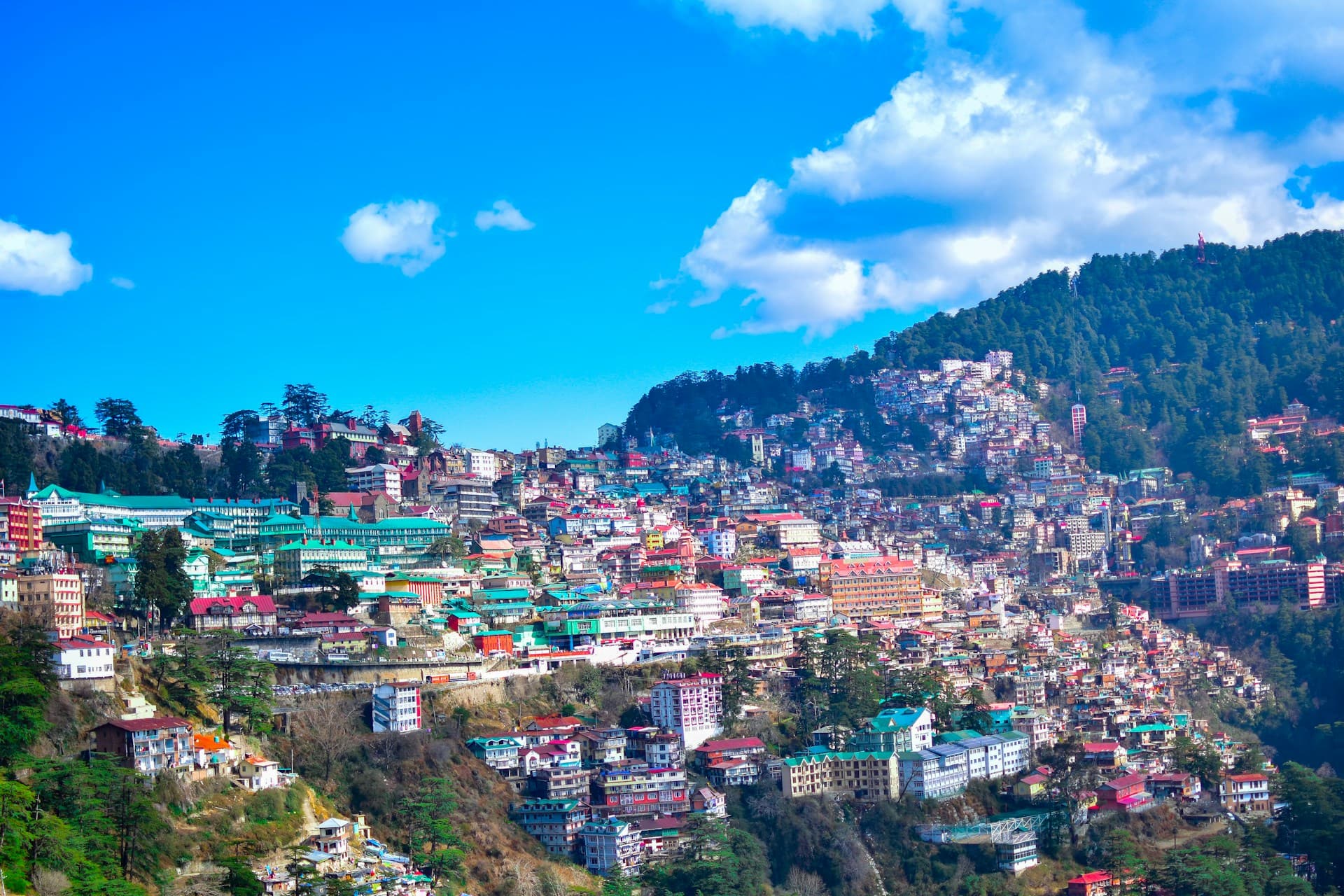
Shimla has a dual identity that most travel writing refuses to acknowledge. The tourism-facing version is all Mall Road promenades, Christ Church photography, and Kufri pony rides. The mountain travel version is a fuel stop, a permit checkpoint, and the last city with a functioning ATM before the road narrows into the Sutlej gorge toward Spiti.
I drove from Dehradun to Shimla as the first leg of a Spiti circuit via Kinnaur - 245 km via Paonta Sahib on NH-7, about 5.5 hours with one stop. I stayed two nights in Shimla before pushing on to Narkanda and eventually Kaza. This page handles both functions: what Shimla offers as a destination in its own right, and how to use it as the launch point for one of the most rewarding mountain drives in the country.
Getting to Shimla from Dehradun
245 km via Paonta Sahib (NH-7), 5.5-6 hours. The road is well-maintained throughout. Alternatively: Dehradun to Chandigarh (170 km) then Chandigarh to Shimla (115 km via NH-5).
From Delhi: 370 km via Chandigarh, 7-8 hours by road. HRTC Volvo from Delhi ISBT: Rs 800-1,200. Kalka-Shimla toy train from Kalka (after train from Delhi): a scenic 5-hour journey, Rs 300-800.
Flying: Jubbarhatti airport is 23 km from Shimla. Flights from Delhi Rs 3,000-7,000. Taxi to city Rs 500-800.
Shimla as a destination
Mall Road and Ridge: The central promenade. Christ Church at one end, Scandal Point at the other. Evening walking is the main activity - no vehicles allowed. Good for a 2-hour stroll.
Jakhu Temple: Hanuman temple at 2,455m, highest point in Shimla. 2 km uphill walk from Ridge. 108-foot Hanuman statue visible from the city. Monkeys are aggressive - secure your belongings.
Kufri: 16 km from Shimla. Pony rides, small zoo, snow in winter. Honestly overrated as a tourist spot but the drive through pine forests is pleasant.
Chadwick Falls: 7 km from Shimla. Worth a visit during monsoon when the waterfall is at full flow. Dry in winter and spring.
Advanced Studies Institute (IIAS): The former Viceregal Lodge. Beautiful colonial architecture. Open for tours. The building and grounds are more interesting than most Shimla tourist spots.
Shimla to Kaza via Kinnaur (NH-5)
This is the main event for mountain travelers. 415 km from Shimla to Kaza through the Sutlej gorge, Kinnaur Valley, and the cold desert of Spiti.
Day 1: Shimla to Reckong Peo (220 km, 8-9 hours). Through Narkanda (apple country), Rampur, and into the Sutlej gorge. Last reliable ATM at Reckong Peo.
Day 2: Reckong Peo to Kaza (195 km, 8-10 hours). Through Kalpa views, Pooh, Sumdo (ILP checkpoint), Nako, Tabo, and into Kaza.
The road quality degrades significantly after Reckong Peo. Expect unpaved sections, single-lane stretches, and potential landslide delays in monsoon. See /guides/monsoon-routes for the risk assessment.
This route is considered safer in monsoon than the Manali-Kaza route via Kunzum La, because it avoids the 4,551m pass entirely.
The Kalka-Shimla toy train
UNESCO World Heritage railway. 96 km from Kalka to Shimla, 102 tunnels, 5-6 hours. Built in 1903.
Classes: First class Rs 600-800, Chair car Rs 300-400, Second class Rs 30. Book on irctc.co.in at least a week ahead for first class.
The experience is the point, not the speed. Winding through pine forests, crossing bridges, entering tunnels. Best seats: left side going up for valley views.
Practical note: if you are staging for Spiti, the toy train adds a day vs driving from Chandigarh directly. Worth it if you have the time.
Shimla as a Spiti staging town
What to do in Shimla before Spiti:
Withdraw cash: Rs 20,000-25,000 for the full Spiti circuit. Shimla ATMs all work. Reckong Peo is the last semi-reliable ATM. Kaza ATM is frequently empty.
Fuel up: Full tank before leaving. Next reliable fuel is Reckong Peo (220 km). Carry 5L extra if driving a vehicle with a small tank.
Groceries: Stock dry snacks, instant noodles, biscuits, ORS sachets from Shimla markets. Kaza has basic supplies but limited variety.
Diamox: Buy from Shimla pharmacies if not already sourced. Spiti altitude reaches 4,250m at Chandratal.
Offline maps: Download the full Kinnaur-Spiti stretch. Signal drops out after Reckong Peo.
See /spiti for the full Spiti Valley guide and /guides/atm-cash-guide for cash logistics.
Weather and the right months
March-May: Pleasant, 15-25C. Apple blossoms. Roads to Spiti may still be snowed in at higher sections.
June: Warm, 20-30C. Spiti route fully open. Good departure window.
July-August: Monsoon. Shimla gets heavy rain. Kinnaur highway has landslide risk. Not recommended for Spiti circuit.
September-October: Best months. Clear skies, pleasant temperatures, Spiti route open and dry. My recommended window.
November-February: Cold, 0-10C. Snow possible. Shimla itself is accessible but Spiti route is closed.
Budget breakdown
Budget (Rs 1,500-2,500/day): Budget hotel Rs 600-1,000, dhaba meals Rs 300-400/day, Mall Road walking (free), toy train Rs 300.
Mid-range (Rs 3,000-6,000/day): Heritage hotel Rs 2,000-4,000, restaurant meals Rs 600-900/day, Kufri day trip Rs 500.
Spiti staging costs: 2 nights accommodation Rs 1,200-2,000, fuel top-up Rs 1,000-1,500, supplies Rs 500-1,000, cash withdrawal (free). Total Shimla staging: Rs 3,000-5,000.
Shimla vs Manali for Spiti entry
Shimla route (via Kinnaur, NH-5): 415 km to Kaza. Lower maximum altitude (no high pass). Better road surface overall. Safer in monsoon. More towns and fuel stops en route. Takes 2 days.
Manali route (via Rohtang/Kunzum La): 200 km to Kaza. Crosses Kunzum La at 4,551m. Unpaved 65 km Batal-Kaza stretch. Higher risk in monsoon. Faster when conditions are good. Takes 1 long day.
Recommendation: Enter via Shimla-Kinnaur, exit via Manali-Rohtang. This gives you the best of both routes and avoids repeating the same road. If doing one-way only, Shimla is the safer bet especially July-September.
When to go
What to pack
A full packing checklist is available to tick off and share. Start with these essentials, then adjust for the current forecast, route and your own needs: