Best power banks for multi-day treks
20K vs 30K mAh and solar options: what actually lasts five days without a charge point. Six power banks tested on Himalayan treks.
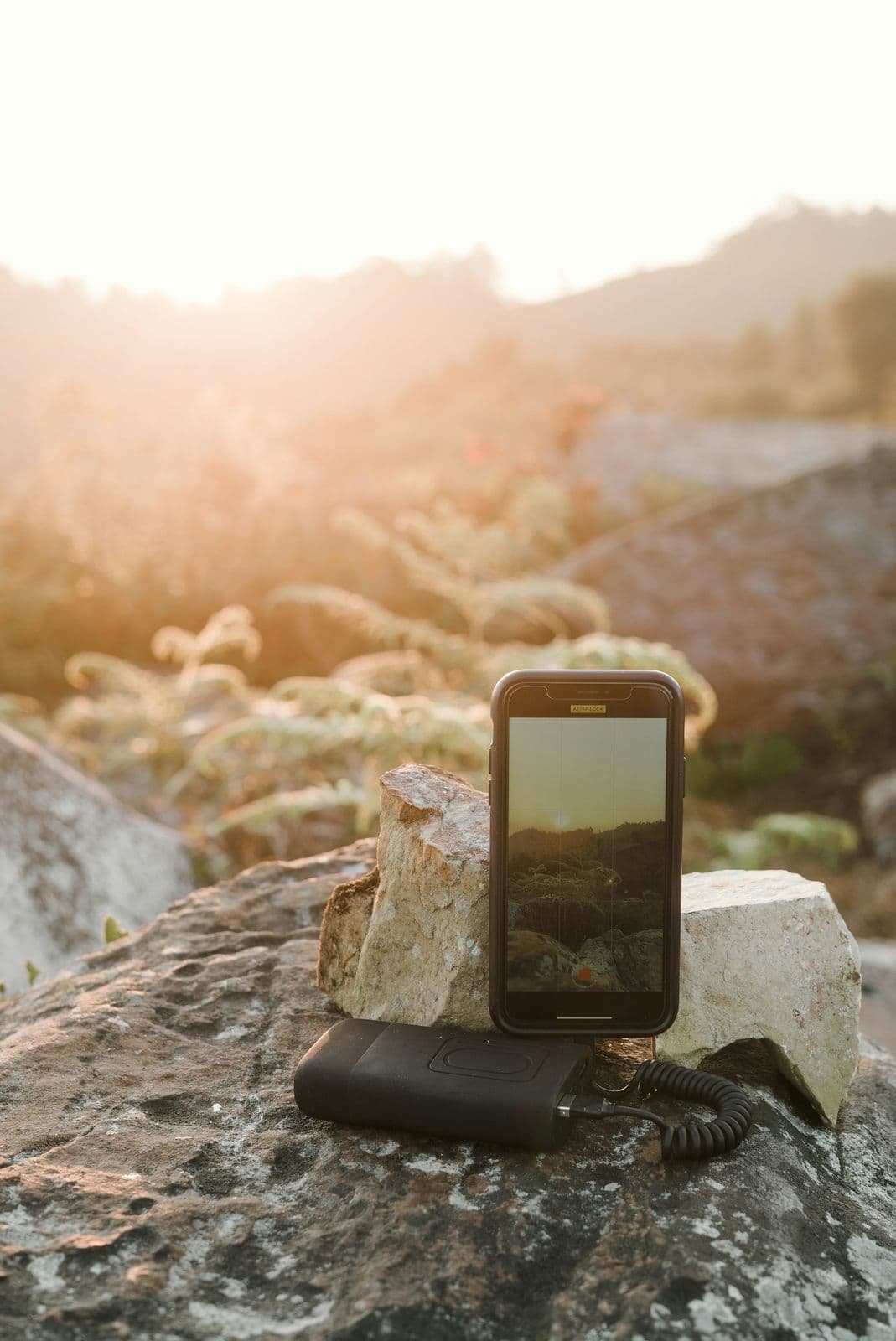
Here is the exact situation you are about to be in: day four of a multi-day trek, no charging points since the guesthouse three nights ago, cold enough at night that your sleeping bag is the warmest thing in camp, and your phone is at 8%. You have GPS tracks you have not downloaded offline. You have photos you have not backed up. You have a headlamp that stopped responding to the power button this morning. The problem has three layers. First: no charging infrastructure. From Spiti Valley village guesthouses to the high camps on the Kedarnath approach, you can go four to five days without a working socket. Second: cold temperatures reduce lithium battery capacity significantly. Third: altitude means continuous GPS use. I have been figuring this out across several trips from Dehradun. This article covers six power banks reviewed against the specific demands of multi-day Himalayan trekking, with real calculations for how long each will actually last.
Detailed reviews
1. Mi 20000 mAh Pro (Xiaomi)
Best value✓ Pros
+ Best value on this list at Rs 1,499 for 74Wh
+ 18W fast charge output and input
+ 440g is mid-range weight for 20K capacity
+ USB-C and USB-A outputs - charges two devices simultaneously
✕ Cons
– No pass-through charging
– Takes 6-7 hours to fully recharge
– 440g adds up if carrying two
2. Ambrane 20000 mAh
Budget pick✓ Pros
+ Cheapest 20K option at Rs 1,299
+ Lightweight at 380g
+ Available widely in India
✕ Cons
– Transfer efficiency around 78-80% vs 85% for Mi
– No fast charging - 10W output only
– Build quality step down from Xiaomi
3. Anker PowerCore 20100
✓ Pros
+ Anker build quality is genuinely best-in-class
+ PowerIQ fast charging across both ports
+ Excellent cold-weather capacity retention
+ 356g is lighter than the Mi for near-identical capacity
✕ Cons
– Rs 2,799 is nearly double the Mi price
– No USB-C port on this model
– Availability can be inconsistent on Amazon India
4. Romoss Sense 8+ (30000 mAh)
✓ Pros
+ 111Wh capacity - enough for a 5-day trek solo
+ 18W fast charge
+ Three output ports for charging multiple devices
+ Eliminates the need to carry two 20K banks
✕ Cons
– 580g is heavy
– Takes 10+ hours to fully recharge
– Bulkier than two separate 20K banks
– Not airline-friendly above 100Wh on some carriers
5. BigBlue 28W Solar Panel + Power Bank Combo
✓ Pros
+ Genuinely generates power on the trail
+ 28W output in direct sun - charges a 20K bank in about 5-6 hours
+ No weight limit on trip duration - infinite energy in theory
✕ Cons
– Direct sun only - clouds, shade, and trail orientation reduce output to near-zero
– Panel weighs 600-700g on top of the bank weight
– Rs 3,999-5,999 for inconsistent output
– Requires hanging on backpack while walking - awkward
6. Jackery Bolt 6000 mAh
✓ Pros
+ Built-in Lightning and micro-USB cables - no separate cables to carry
+ 170g is the lightest option
+ Pocket-sized for summit day or day hike use
✕ Cons
– Only 22Wh - roughly 1.5 phone charges
– Not a primary bank for multi-day treks
– No USB-C cable built in
Buying guide
The number that actually matters: Wh, not mAh
mAh measures charge at a specific voltage - power banks store energy at 3.7V internally, while USB output is 5V. A 20000 mAh bank stores approximately 74Wh. At 85% transfer efficiency, you get about 63Wh usable. A typical smartphone has a 10-15Wh battery - so a 74Wh bank gives you four full charges reliably.
Five-day consumption estimate: Phone two charges per day at 12Wh = 24Wh/day. Headlamp recharge every 3 days at 4Wh. Camera battery every 2 days at 8Wh. Total for 5 days: roughly 140-160Wh. That is two 20000 mAh banks or one 30000 mAh bank plus a small backup.
Cold temperature: the number nobody puts on the box
Lithium-ion batteries lose capacity in cold. At 0C, expect 15-20% capacity loss. At -10C, expect 30-40% loss. A 20000 mAh bank that gives four phone charges at 20C may only give two and a half at -5C.
The practical fix: sleep with the power bank inside your sleeping bag. Body heat keeps it at 25-30C overnight. In the morning, move it to an inner jacket pocket, not an outer pack pocket. This alone recovers most of the cold-weather capacity loss.
Sleep with your power bank inside your sleeping bag and keep it in an inner jacket pocket during the day. This single habit recovers most cold-weather capacity loss.
Bottom line
3-4 day trek (Kedarnath, Chopta): One Mi 20000 mAh Pro at Rs 1,499. 5-7 day trek (Spiti circuit, Hampta): Two Mi 20000 mAh banks at Rs 2,998 total, or one Romoss 30000 mAh at Rs 2,499. 7+ day remote trek: Romoss 30000 plus Jackery Bolt 6000 as backup, at Rs 3,998 total. Solar: only if you have 4-5 hours of direct sun daily, otherwise two conventional banks are more reliable. Always sleep with the power bank in your sleeping bag in cold weather.
Trips this gear is for
Destinations
Full packing checklists
tick items off as you buy