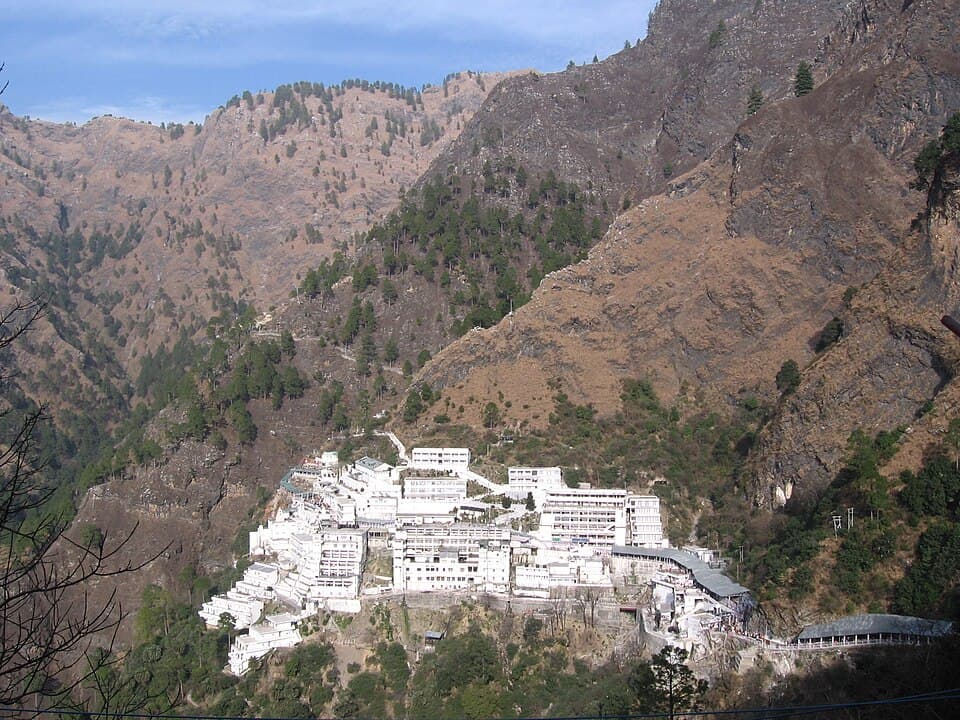
Vaishno Devi is the most visited pilgrimage destination in India, with over 85 lakh (8.5 million) visitors every year. The shrine of Mata Vaishno Devi sits inside a cave at 1,584 metres in the Trikuta Mountains near Katra, Jammu. The 13 km trek from Katra to Bhawan is well-maintained with a paved path, shelters, and food stalls throughout.
Unlike Kedarnath or Amarnath, Vaishno Devi is a year-round pilgrimage — the shrine never closes. But crowds vary dramatically by season and day of week. This guide covers registration, the trek, queue management, and practical tips that most guides skip — written for the first-time visitor who wants to plan efficiently and avoid the worst crowds.
How to reach Katra
By Train (recommended)
Katra Railway Station (SVDK) is the terminus of the Vaishnavi Express and several other trains from Delhi, Mumbai, and Kolkata. The station is 1 km from the trek starting point.
Delhi to Katra: Vaishnavi Express (12919/12920) — 12 hours, departs New Delhi at 8:20 PM. Shri Shakti Express is another option. Book on IRCTC.
By Air
Jammu Airport (IXJ) is the nearest airport, 48 km from Katra. Taxis from airport to Katra: ₹800–1,200 (1.5 hours). Airlines: IndiGo, SpiceJet, Air India.
By Road
Katra is 48 km from Jammu (1–1.5 hours on NH-44). Regular buses from Jammu bus stand. If driving from Delhi: 640 km, 10–12 hours via Jalandhar–Jammu highway.
You don't need to stay in Jammu. Go directly to Katra — everything you need is there.
Registration & yatra slip
Registration is mandatory. No registration = no entry to the trek.
Online (recommended)
Visit maavaishnodevi.org → Click "Yatra Registration" → Fill form with Aadhaar, phone, travel date, number of pilgrims → Pay ₹0 (free) → Get yatra slip with QR code.
At Katra counter
Registration counters at Katra bus stand and near the trek starting point. Carry Aadhaar. Can take 30–60 minutes during peak season.
Group registration
Register up to 6 people in one booking. One lead pilgrim's Aadhaar is sufficient.
RFID card
Issued at the starting point after registration verification. Mandatory to carry. Tracks pilgrim count on the route.
Slot booking
During Navratri and peak weekends, slot booking may be required. Check the website 2–3 days before your visit.
The trek: Katra to Bhawan
The route has two options
Old route (via Adhkuwari): Steeper but shorter. Passes through Adhkuwari cave (where Mata meditated for 9 months). More historic but harder on knees.
New route (via Himkoti): Slightly longer but gentler gradient. Better for elderly and children. Air-conditioned battery car available on this route (₹150–350).
Key stops
Ban Ganga (2.5 km) → Adhkuwari (6 km, cave darshan) → Sanjichhat (Helicopter pad, 9.5 km) → Bhawan (13 km, the shrine)
Transport options
Walk: Free
Pony: ₹600–1,200 one way
Palki: ₹4,000–6,000 one way
Battery car (new route): ₹150–350 one way
Helicopter: ₹1,800 one way (Katra to Sanjichhat, 3.5 km remaining walk)
Darshan tips & queue
Queue management
Darshan queue can be 1–6 hours depending on day and season. Tips to minimize wait:
- Weekdays are faster than weekends. Tuesday and Saturday have the longest queues.
- Night yatra (start at 8–10 PM, reach by 3–5 AM) has shorter darshan queues.
- Winter months (Dec–Feb) have the shortest queues overall.
- Navratri (April + October): Expect 4–8 hour queues. Avoid unless you specifically want the festival.
Inside the cave
The original shrine is inside a natural cave. You walk through a narrow, wet passage (knee-deep water in monsoon). Darshan takes 30–60 seconds — the cave is small. Keep belongings minimal.
Bhairon Baba temple
After main darshan, trek 1.5 km up to Bhairon Baba temple. Considered incomplete without this. Ropeway available (₹100).
Budget breakdown
- Train: ₹300–800 (sleeper class from Delhi)
- Stay at Katra: ₹500–800/night (dharamshala/budget hotel)
- Food: ₹200–400/day
- Trek: Walk (free)
- Prasad + misc: ₹500
- Train: ₹1,200–1,800 (3AC)
- Stay: ₹1,500–2,500/night (hotel near trek starting point)
- Food: ₹400–600/day
- Pony one way: ₹800–1,200
- Prasad + misc: ₹1,000
- Flight to Jammu + taxi: ₹5,000–8,000
- Stay: ₹2,500–4,000/night
- Helicopter: ₹1,800 + battery car
- Food: ₹600–1,000/day
Best time to visit
Year-round destination. But experience varies:
March – May: Pleasant weather (15–30°C). Navratri in April brings massive crowds. Weekdays are manageable.
June – August: Hot at Katra (35°C+) but cooler on trek. Monsoon rain makes trek slippery. Umbrella essential. Fewer crowds than spring.
September – November: Best overall. Navratri in October is crowded but weather is perfect. Post-Navratri is ideal.
December – February: Cold (5–15°C). Snow possible above Adhkuwari. Shortest queues of the year. Carry warm clothes.
Our recommendation: November or February — good weather, minimal crowds, best darshan experience.
Safety tips
Vaishno Devi is one of the safest pilgrimages in India. The Shrine Board manages security, medical aid, and crowd control excellently.
Medical
Medical aid stations at every 2 km on the trek. PHC at Adhkuwari and Bhawan. Nearest hospital: Katra (well-equipped).
Security
Entire route has CCTV. Security checkpoints at base and key points. Bags are scanned. Sharp objects, tobacco, and alcohol not allowed.
Shoes
Wear comfortable walking shoes (sports shoes are fine — this isn't a mountain trek). Remove shoes before entering the cave shrine.
Cloakroom
Available at Katra base. Leave heavy luggage — carry only a small daypack with essentials.
Communication
Jio, Airtel, BSNL all work on the route. WiFi available at key shelters. You won't lose signal.
When to go
What to pack
A full packing checklist is available to tick off and share. Start with these essentials, then adjust for the current forecast, route and your own needs:
Disclosure: some links above are affiliate links. If you buy through them, TravelBoa may earn a small commission at no extra cost to you. That does not affect which items are included.