Best rain ponchos for Char Dham yatra
Monsoon ponchos for Char Dham that pack small and dry fast between temples. What works over a daypack on the Kedarnath trail.
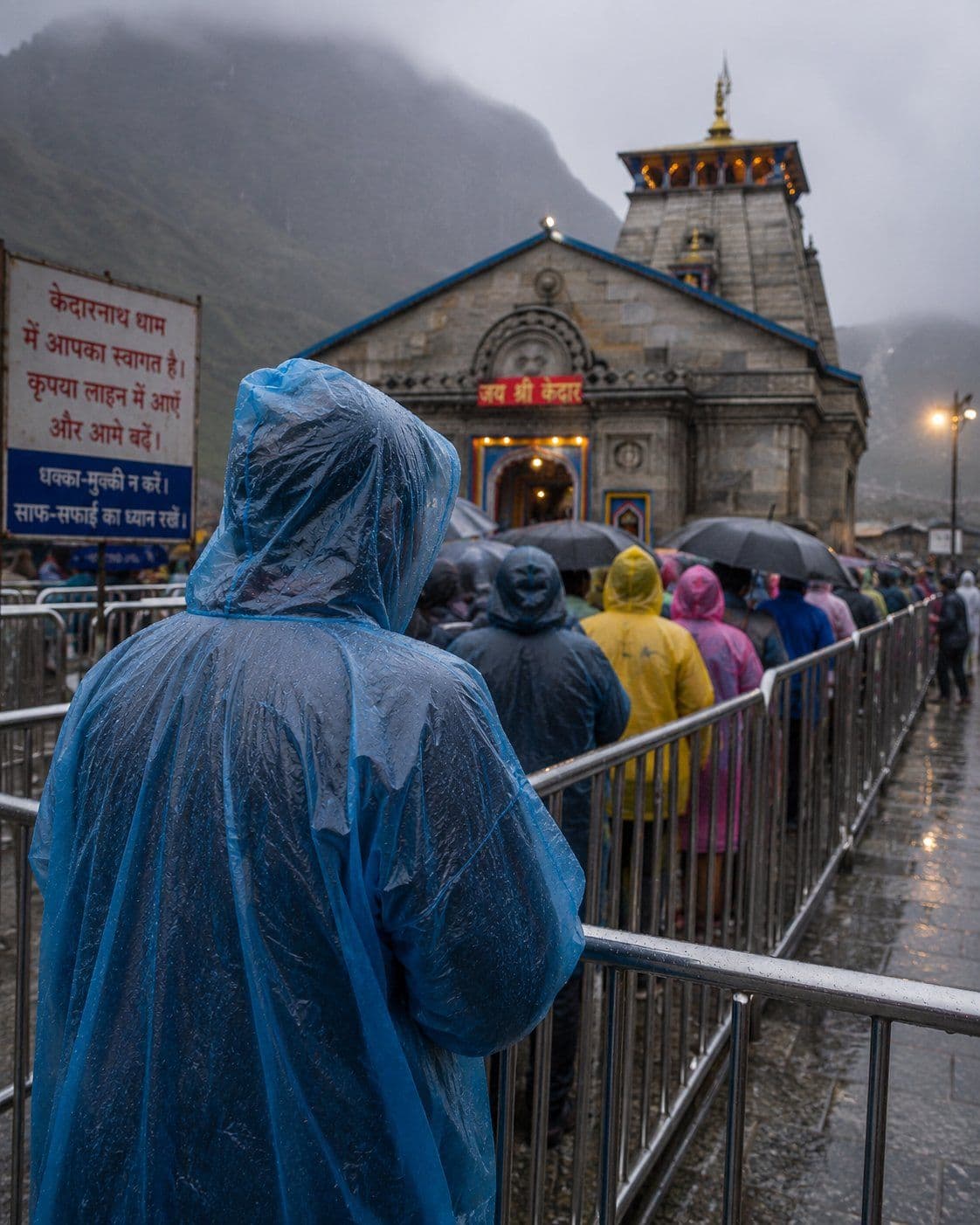
Here is the situation nobody warns you about before your first Char Dham yatra: you are standing in a temple queue at Badrinath or Gangotri, two hours in, the clouds have opened up, and you are watching the rain hit your backpack at a flat angle. Your rain jacket is doing its job - on you. Your bag, however, is soaked through. The extra fleece you packed for the cold temple interior is wet. Your documents pouch is wet. The person next to you with a poncho is fine. Their bag is covered. They look like a large shapeless mushroom, but they are dry. That is the argument for a poncho on a pilgrimage. A poncho covers both you and whatever pack you are carrying. A rain jacket covers only you. For Badrinath, Gangotri, and Yamunotri - where the pilgrimage involves more queuing and short walks than sustained trekking - a poncho is the more practical piece of gear.
Detailed reviews
1. Decathlon Quechua NH100 Poncho
Best value✓ Pros
+ Rs 299 is practically disposable pricing
+ Covers pack up to 50L
+ Packs to fist-size, weighs 200g
+ Available at Decathlon Rajpur Road, Dehradun
✕ Cons
– Single-season durability - seams weaken after 10-15 heavy rain events
– No ventilation - sweaty under sustained walking
– Thin material snags on pack buckles
2. Quechua MH500 Hiking Poncho
Best overall✓ Pros
+ Stronger material than NH100 - survives multiple seasons
+ Integrated hood with drawcord adjustment
+ Ventilation slits under the arms
+ Covers pack up to 60L
✕ Cons
– Rs 599 is double the NH100 for incremental improvement
– Still catches wind on exposed sections
– Not breathable enough for sustained Kedarnath trekking
3. PONDA Budget Poncho (Amazon Generic)
Budget pick✓ Pros
+ Cheapest option available
+ Works for a single rain event
+ Widely available on Amazon
✕ Cons
– Seams leak within the first heavy rain
– Thin PVC tears easily on pack straps
– Sizing inconsistent - often too small for pack coverage
– Chemical smell when new
4. Marmot PreCip Poncho
✓ Pros
+ NanoPro waterproofing is genuinely breathable
+ Ultralight at 280g for the quality level
+ Packs smaller than most competitors
+ Multi-season durability
✕ Cons
– Rs 4,999-5,999 is 8-10x the Decathlon options
– Overkill for temple queues and short walks
– Availability inconsistent on Amazon India
– Not worth the premium for a single yatra
5. Columbia Watertight Poncho
✓ Pros
+ Omni-Tech waterproofing performs well
+ Good pack coverage
+ Durable construction for multi-season use
+ Generous sizing for Indian body types
✕ Cons
– Rs 2,499-3,499 is steep for a poncho
– Heavier than Marmot at 350g
– Packs larger than Decathlon options
– Availability varies on Amazon India
Buying guide
Poncho vs rain jacket: when each wins
On the Kedarnath route, where you are trekking 16 km with elevation gain, a rain jacket genuinely outperforms a poncho for comfort and safety. But for Badrinath, Gangotri, and Yamunotri - where the pilgrimage involves more queuing and short walks - a poncho is more practical. Even for Kedarnath, a poncho is useful for the queue at the top and the sections between Gaurikund and Jungle Chatti where you are walking slowly with a crowd.
The trade-off is real: ponchos are not breathable under sustained walking load, they catch wind badly, and they look awkward in tight crowds. For a 10-14 day Char Dham circuit with variable rain, a poncho that packs small and dries fast is the right tool.
Bottom line
Single Char Dham yatra: Quechua NH100 at Rs 299 - buy two for peace of mind. Regular pilgrimages or multi-week yatra: Quechua MH500 at Rs 599 for the ventilation and durability. Regular trekker who also does pilgrimages: Marmot PreCip if you find it under Rs 5,000. Never rely on a generic Amazon poncho for a multi-day pilgrimage. The Rs 100 saved is not worth a wet sleeping bag at Badrinath.
Trips this gear is for
Destinations