Best time to visit Char Dham - Kedarnath, Badrinath, Gangotri, Yamunotri
Temple opening dates, month-by-month conditions, crowd windows, helicopter availability, and the honest case for September over May.
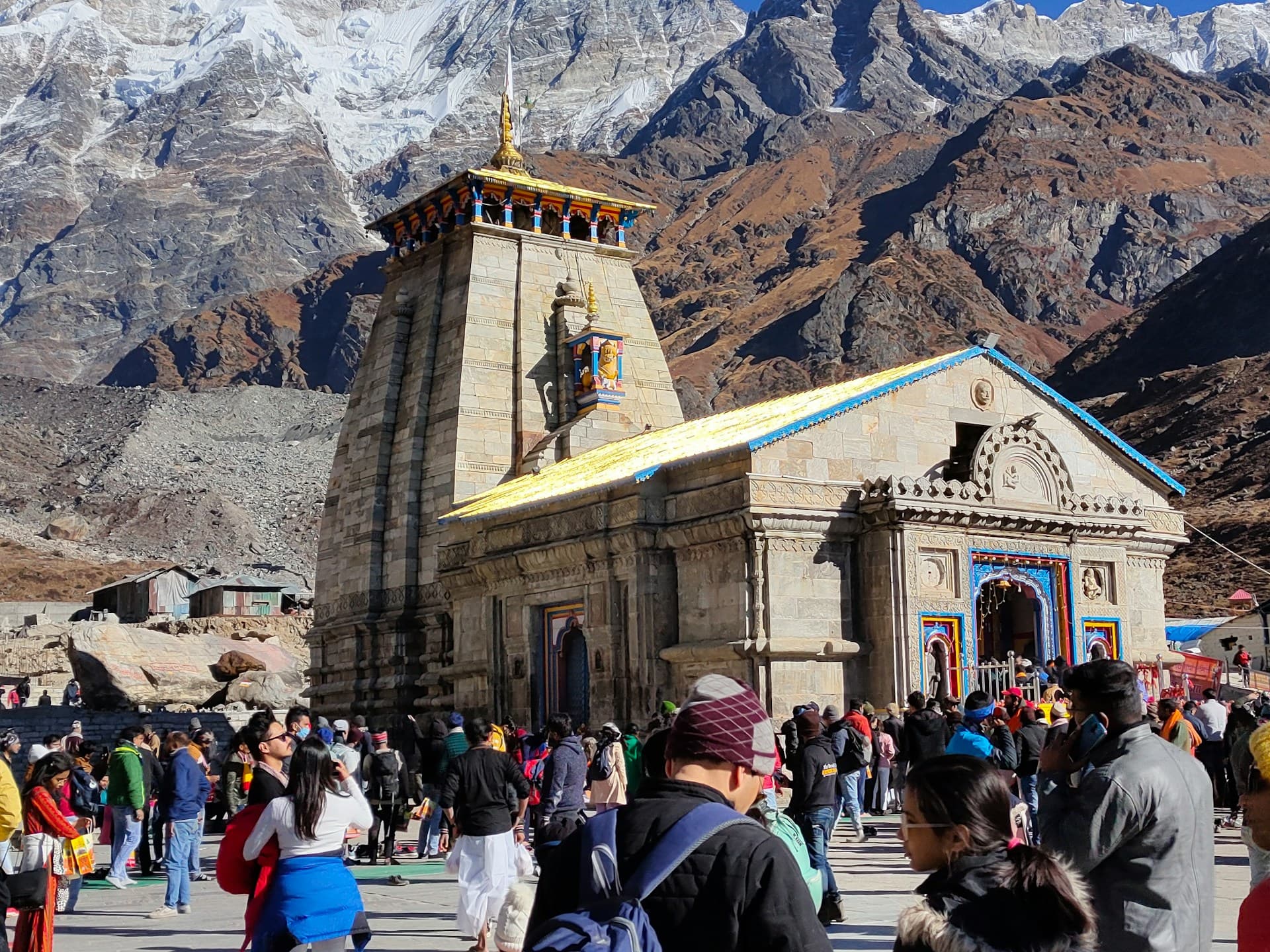
Here is the problem that nobody's travel article mentions until you have already lost money on it: the Char Dham temple opening dates are not announced until 4 to 8 weeks before they happen. They are decided by a committee of priests, astrologers, and state government officials, and that decision comes out in late March or early April for temples that open in late April or early May. If you booked flights to Dehradun in January for a "first week of May" Char Dham trip, you may have booked for a week when Kedarnath is still closed.
I have spoken to at least a dozen pilgrims who have shown up at Gaurikund to start the trek, only to find that the official opening was pushed to a week later than they had read on some article that had the previous year's dates. That is a Rs 8,000 hotel booking down the drain in a village with nothing to do for a week.
The dates are announced on the official Uttarakhand government portal at registrationandtouristcare.uk.gov.in, and that is the only source you should be checking. Not a blog post from 2024. Not a travel agency's Instagram.
This guide explains the full season, month by month, for all four dhams. But the most important sentence in it is this one: wait for the official date announcement before booking non-refundable flights and accommodation.
Temple opening dates vary each year. The 2025 Kedarnath opening was May 2nd. In 2024 it was May 10th. In 2023 it was April 25th. Check registrationandtouristcare.uk.gov.in for confirmed dates before booking.
How the temple calendar works
The Char Dham season runs from roughly late April or early May to Diwali or Bhai Dooj in October-November. Outside this window, all four temples are closed. The deities of Kedarnath, Badrinath, Gangotri, and Yamunotri are ceremonially transferred to winter residences in the lower valleys.
The opening dates are tied to the Hindu calendar and determined by tithi (lunar day). Gangotri and Yamunotri traditionally open on Akshaya Tritiya; Kedarnath opens on a date the Ukhimath priests calculate from the Panchang, usually within a few days of it. All three land between late April and mid-May. Badrinath typically opens shortly after Kedarnath.
Closing dates follow a similar structure. Kedarnath closes on Bhai Dooj (the day after Diwali). Gangotri closes on Diwali. Yamunotri closes the morning of Diwali. Badrinath closes a few days after Kedarnath, usually within a week.
The state government now requires Char Dham registration before you travel. Registration opens through the official portal a few weeks before the temples open. You cannot generate an e-pass before dates are announced. See the Char Dham e-pass guide for the step-by-step process.
May: peak crowds, helicopter drought
May is when the season launches and the crowds arrive with it. Within the first two weeks of opening, Kedarnath is typically receiving 8,000 to 12,000 pilgrims per day. On weekends in the third and fourth weeks of May, that figure can reach 15,000 and queue times for the main temple darshan reach 3 to 5 hours.
The weather in May is good. Temperatures at Kedarnath sit between 5C and 14C during the day, with clear mornings and possible afternoon cloud. At Badrinath (3,133m), daytime temperatures are 8C to 16C. Gangotri (3,048m) sits at 7C to 15C. Yamunotri (3,293m) is typically 5C to 12C.
Helicopter to Kedarnath in May: nearly impossible to book within 2 to 3 weeks of your travel date. The IRCTC HeliYatra portal is the official booking system. One-way tickets run Rs 5,500 to Rs 7,000. In peak May, these sell out weeks in advance.
May is not a bad month if you have planned 6 weeks in advance and you are comfortable with crowds. It is a bad month if you value solitude at the temple or flexibility.
June: crowds thin slightly, monsoon approaches
The first two weeks of June look much like May. From mid-June onward, the pre-monsoon front begins to influence conditions. Cloud builds in the afternoons. Rain becomes more likely at Gangotri and Yamunotri before it reaches Kedarnath and Badrinath.
Crowd levels in the third and fourth weeks of June are noticeably lower than May peak. Helicopter availability in June is better than May.
July and August: the monsoon decision
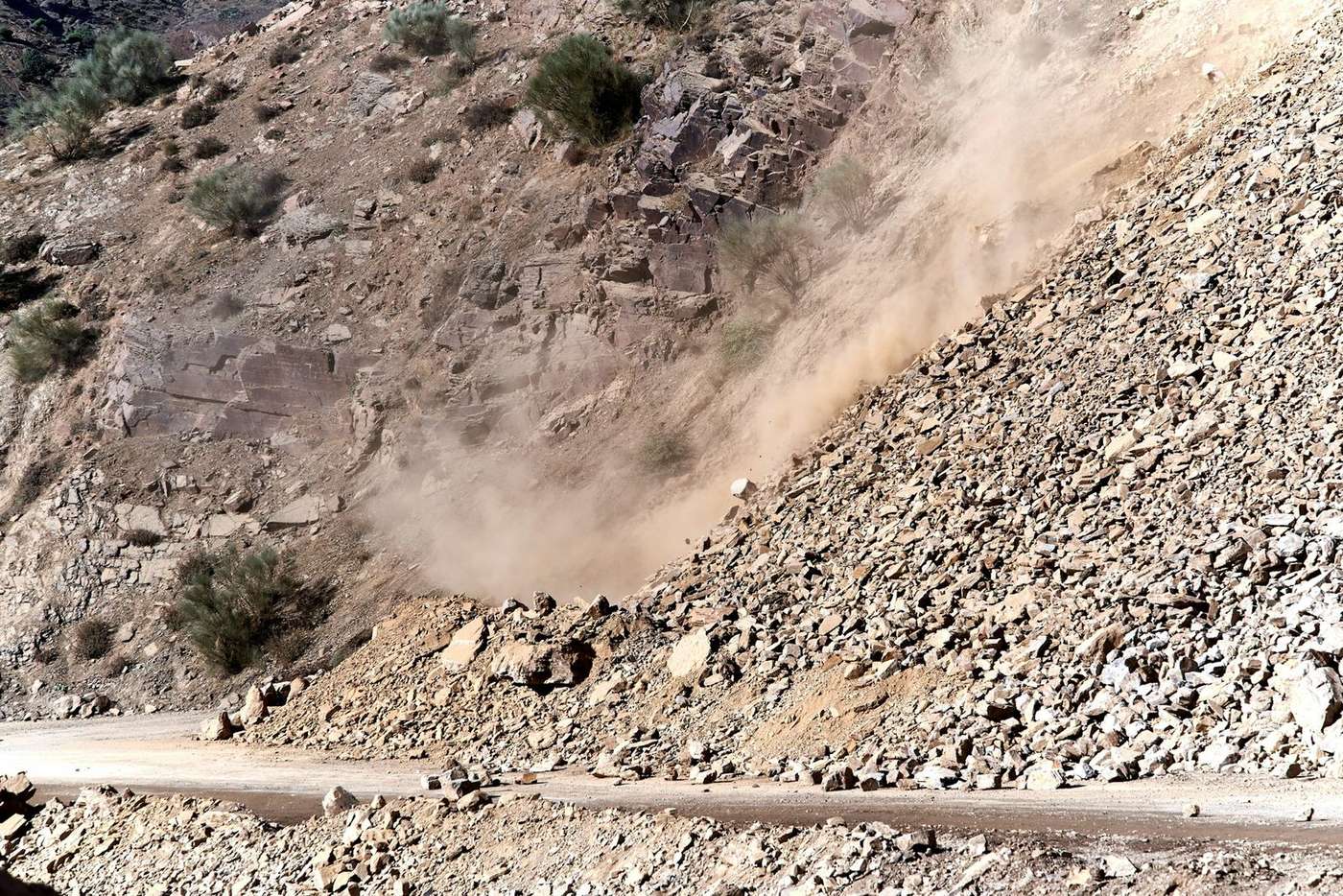
Landslides on Uttarakhand highways during monsoon - the primary risk in July-August
July and August are monsoon months. The temples remain open. But the roads become significantly more dangerous. Landslides are the primary risk, not rain. The NH-7 corridor through Rudraprayag and Chamoli districts is one of the most landslide-prone road stretches in India during monsoon.
If you are an experienced traveler comfortable with uncertainty, last-minute route changes, and the possibility of being stranded for 12 to 24 hours at a landslide clearance, monsoon Char Dham is feasible. The temples are nearly empty and the landscape is explosively green.
If this is your first trip, or you are traveling with elderly family members or young children, avoid July and August entirely. The risk-reward does not work.
The Kedarnath trail in monsoon can see rock and mudslides. In August 2023, sections of the trail near Rambara were damaged. SDRF rescues increase significantly in July-August. Not recommended for first-time visitors.
September-October: the window I actually recommend
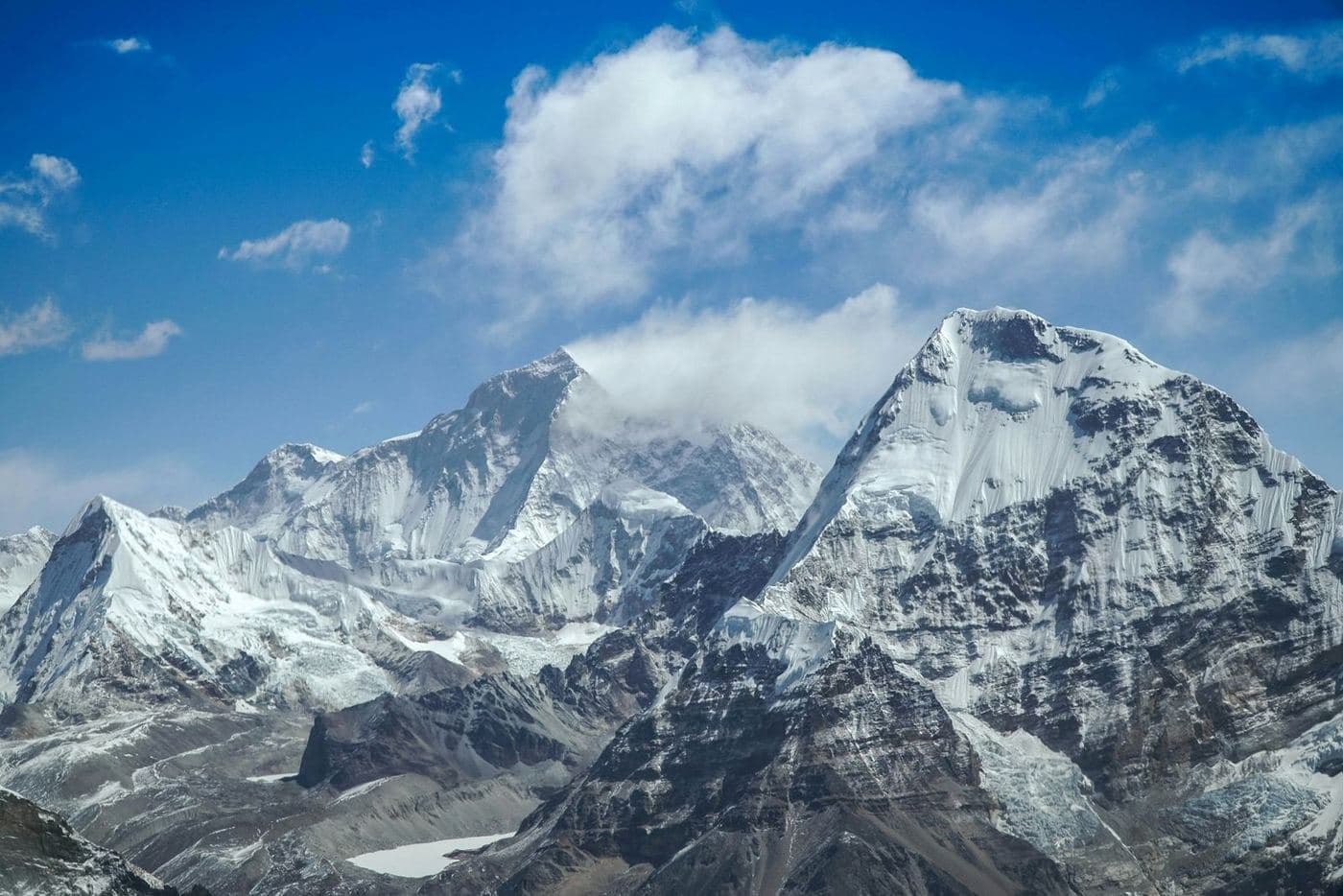
October skies after monsoon withdrawal - views that May rarely delivers
This is the part of the article that matters most. If you have flexibility in your travel dates, September (second half) and October are the months I would choose every time.
The monsoon withdraws from Uttarakhand between September 15 and September 25 most years. Within days of withdrawal, the air clears, the skies turn a deep blue, and the entire Himalayan range snaps into focus. Views from the Kedarnath temple that are obscured by cloud for 4 months suddenly appear as if someone cleaned a window.
Crowd levels in late September are Low. In October they are Low to Medium. The trail is quiet. Darshan at Kedarnath takes 15 to 30 minutes, not 3 to 5 hours.
The trade-off is temperature. October nights at Kedarnath drop to -2C to -5C. You need proper cold-weather gear. But the gear is a solvable problem. The empty trails, the clear views, and the available helicopter slots are not things money can buy in May.
Helicopter bookings are available with 1 to 2 weeks notice in September-October, sometimes less.
For the empty-temple October experience, aim for October 1st to 15th. The last 2-3 days before Kedarnath closes (around Bhai Dooj) see a small crowd for the closing ceremony.
Month-by-month comparison
| Month | Kedarnath | Crowd | Roads | Helicopter | Verdict |
|---|---|---|---|---|---|
| Early May | 5-14C, clear | Peak (15K/day) | Good | Books out weeks ahead | Good weather, worst crowds |
| Late May | 5-13C, clear | Peak | Good | Nearly impossible | Best weather, worst availability |
| June | 5-12C, pre-monsoon | High to Med-High | Good | Better availability | Reasonable compromise |
| July | 6-10C, full monsoon | Low | Landslide risk | Often suspended | Not for first-timers |
| August | 5-10C, peak monsoon | Very Low | Highest risk | Often suspended | Avoid unless experienced |
| September (late) | 4-11C, clearing | Low | Improving | Available 1-2 wk notice | Excellent post-monsoon |
| October | 2-10C, clear | Low-Med | Good | Available | Best overall month |
| November | -5 to 2C, closing | Very Low | Deteriorating | Limited | Closing ceremonies only |
Kedarnath: the one that sets the pace
Kedarnath (3,583m) is the highest of the four dhams and the one that governs the season calendar most visibly. Its opening on Akshaya Tritiya is the symbolic start of the yatra.
The specific timing problem with Kedarnath is the helicopter. Total daily helicopter capacity is capped at around 1,000 to 1,200 passengers per day. Against peak-season demand of 15,000 daily pilgrims, slots are scarce.
One more detail: Chopta (3,680m), about 35 km from Ukhimath, makes an excellent 2-night acclimatization base before the Kedarnath trek. Chopta in October is one of the best places in Uttarakhand to be.
Badrinath: easier access, later opening
Badrinath (3,133m) is the most accessible of the four dhams. NH-7 runs directly to the town, the trek from road to temple is under 500m. It opens 2 to 4 weeks after Kedarnath.
GMVN runs guesthouses at Badrinath that are clean, reasonably priced, and typically available at short notice in September-October. Book via gmvnl.in.
Gangotri and Yamunotri
Gangotri (3,048m) is accessible by road directly to the temple. The Gaumukh glacier trek (18 km one way from Gangotri) is the major extension. Gangotri is also the least crowded of the four dhams throughout the season.
Yamunotri (3,293m) requires a 6 km trek from Janki Chatti with 900m elevation gain. In October, the trail is dry and the hot springs at the temple complex are pleasant in cold air. Yamunotri closes earliest of the four dhams (on Diwali morning).
Planning the full circuit
The standard 10-12 day circuit from Rishikesh covers all four dhams. Most people start with Yamunotri (westernmost), then Gangotri, then Kedarnath, then Badrinath. This sequence follows the traditional pilgrimage order and the road geography.
In October, plan backwards from Yamunotri's closing date (Diwali morning). Start the circuit 10 to 12 days before Diwali. This gives you the full circuit with buffer days for road delays.
If doing the full circuit in October, plan Yamunotri first and Badrinath last. Yamunotri closes on Diwali morning (earliest), Badrinath closes last (3-5 days after Kedarnath). This gives you the maximum safety margin.
Frequently asked questions
When did the Char Dham temples open in 2026?
Yamunotri and Gangotri opened on 19 April 2026, Kedarnath on 22 April 2026 and Badrinath a few days later. The 2027 dates will be announced on Maha Shivratri 2027. Track them at registrationandtouristcare.uk.gov.in and do not book non-refundable travel before confirmation.
Is it safe to do Char Dham in September?
Yes. The second half of September, after the monsoon withdraws, is one of the safest windows. Roads have been cleared, temples are open, crowds are low, and weather is stable with clear mornings. Target the last 10 days of September.
Can I do all four Char Dhams in one trip?
The full circuit from Rishikesh takes 10 to 12 days at a reasonable pace. Rushing it into 7 days involves very long driving days and limited time at each temple. In October, plan backwards from Yamunotri's closing date on Diwali morning.
Does Char Dham registration apply to all four temples?
Yes. Registration at registrationandtouristcare.uk.gov.in is mandatory for all four dhams in one registration. The e-pass is required at checkpoints. Kedarnath has a daily pilgrim cap enforced through the system.
What is the minimum budget for the Char Dham yatra?
Shared-vehicle road trip from Rishikesh, GMVN guesthouses, trekking to Kedarnath, and dhaba meals runs approximately Rs 15,000 to Rs 20,000 per person for 10 days. Adding helicopter and private accommodation pushes toward Rs 30,000 to Rs 40,000.
How cold is Kedarnath in October?
Daytime 2C to 10C, nights -2C to -5C. You need a down jacket, thermal base layers, wool socks, waterproof shoes, gloves, and a hat. Carry your own sleeping bag if staying overnight.
Is the Char Dham yatra physically demanding?
It varies. Badrinath and Gangotri require minimal effort. Yamunotri is a 6 km trek with 900m gain. Kedarnath is the hardest: 16 km each way with 1,800m gain. Ponies and palanquins are available at Kedarnath and Yamunotri.
Do I need to book accommodation in advance?
In May-June: yes, book weeks in advance. In September-October: advisable for weekends but mid-week October slots are generally available within 3-5 days. GMVN properties at all four dhams take bookings via gmvnl.in.
Last updated: 2026-05-22
Where this guide applies
Destinations