Best thermals for high-altitude treks
Merino vs synthetic thermals for -5C to 15C on Indian treks. How to layer, what actually dries overnight, and seven budget picks.
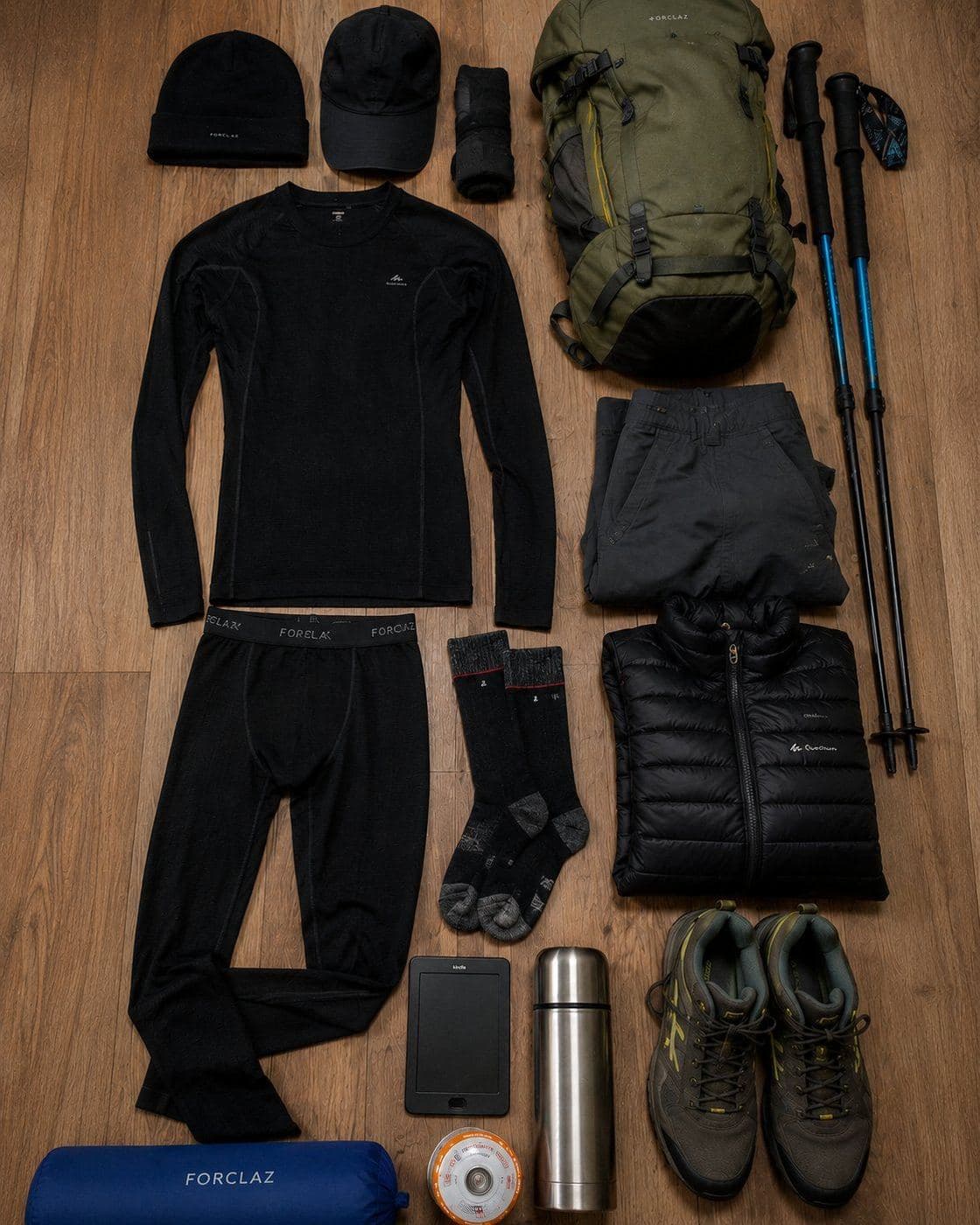
Somewhere around 2,800m on the Kedarnath trail, about two hours out of Jungle Chatti, it started raining. Not a mountain drizzle - a full monsoon downpour. I was wearing a cotton T-shirt under a mid-weight fleece jacket, which felt like a reasonable layering system when I left Gaurikund that morning. Within 20 minutes, I understood exactly why experienced trekkers talk about cotton the way they do. The cotton absorbed the moisture - from rain, from my own sweat - and sat against my skin like a cold compress. The fleece above it was useless. My core temperature dropped. My hands shook. I cut the day short and spent that evening reading fabric science in a dhaba in Sonprayag. That afternoon is the reason I now own four different base layers and care more about what I wear against my skin than almost anything else in my gear setup.
Detailed reviews
1. Quechua Freshwarm Base Layer Set (Synthetic)
Best value✓ Pros
+ Best value base layer available in India at Rs 699 per piece
+ 100% recycled polyester with genuine moisture wicking
+ 150 GSM sweet spot for active trekking
+ Available at Decathlon Rajpur Road, Dehradun - try for fit
✕ Cons
– Develops odor by day 2-3 of continuous wear
– Synthetic feel may bother some wearers
– Not warm enough alone for -5C static conditions
2. Quechua 500 Merino Wool Top
Best overall✓ Pros
+ Genuine merino wool - natural odor resistance for 4-5 days
+ Insulates even when damp - merino advantage over synthetic
+ 180 GSM handles October Kedarnath conditions
+ Softer feel against skin than synthetic
✕ Cons
– Rs 1,499 is double the synthetic option
– Requires careful washing - no machine hot cycle
– Slower to dry than synthetic after full saturation
3. Lux Cozi / Jockey Premium Thermal Set
✓ Pros
+ Cheapest option available everywhere in India
+ Works for static cold - sitting in a bus, sleeping
+ Familiar brands with consistent sizing
✕ Cons
– Cotton-polyester blend absorbs moisture like cotton
– Becomes a cold compress during active hiking
– Fleece lining generates excessive sweat on uphills
– Heavy for the warmth provided
4. Zimba Merino Wool Base Layer Set
✓ Pros
+ Budget merino option at nearly half Decathlon price
+ Genuine merino wool content
+ Good odor resistance for the price
✕ Cons
– Merino percentage varies by batch - not always 100%
– Sizing inconsistent across Amazon sellers
– Stitching quality lower than Decathlon
– Returns process for sizing issues is slow
5. Van Heusen Active Thermal Top
✓ Pros
+ Better moisture management than Lux Cozi
+ Polyester dominant blend with decent wicking
+ Consistent sizing and availability
✕ Cons
– Heavier GSM than needed for active trekking
– Not as effective as Decathlon synthetic for moisture
– Premium pricing for mid-range performance
– Odor buildup by day 2
6. Columbia Midweight Stretch Base Layer
✓ Pros
+ Omni-Heat reflective lining retains body heat effectively
+ Four-way stretch for unrestricted movement
+ Good moisture wicking in the polyester-elastane blend
+ Proven across global alpine conditions
✕ Cons
– Only worth buying at sale price - full price is Rs 2,500+
– Availability inconsistent on Amazon India
– Sizing runs slightly small for Indian body types
Buying guide
Why cotton is the real problem above 3,000m
Cotton absorbs up to seven times its own weight in water. Once wet, it stops insulating entirely - it wicks heat away from your skin through evaporative cooling. At 3,500m with a 15 km/h wind and 6C ambient, this is dangerous.
Synthetic polyester and merino wool both solve this problem differently. Synthetic wicks moisture to the outer surface where it evaporates, keeping skin dry. Merino wool absorbs moisture into the fiber core while keeping the outer surface warm - it insulates even when damp.
Understanding GSM and what to buy for Indian conditions
GSM (grams per square meter) determines thickness and warmth. For Indian mountain conditions: 100-150 GSM for May-June trekking when days are warm but mornings are cold. 180-200 GSM for October-November when nights drop to -5C. Above 200 GSM only for static cold - sitting at camp, not hiking.
The mistake most people make is buying thermals that are too heavy for active use. A 250 GSM fleece-lined thermal feels wonderful in a store but generates excessive sweat within 30 minutes of uphill hiking, which defeats the entire moisture management purpose.
Bottom line
First trek, budget setup: Two Quechua Freshwarm tops at Rs 1,398 total - rotate daily, wash and dry overnight. Multi-day or October trekking: Quechua 500 Merino at Rs 1,499 - the odor resistance and damp-warmth properties earn the premium. Never wear cotton against skin above 3,000m. If you own Lux Cozi thermals, use them for sleeping in cold guesthouses, not for hiking. Buy at Decathlon Rajpur Road in Dehradun if possible - the fit matters more than the brand.
Trips this gear is for
Destinations
Full packing checklists
tick items off as you buy