Best headlamps under ₹1,000
Forclaz HL100 vs Nitecore and more: brightness, battery life and red mode for camping. Five headlamps under Rs 1,000 tested on trail.
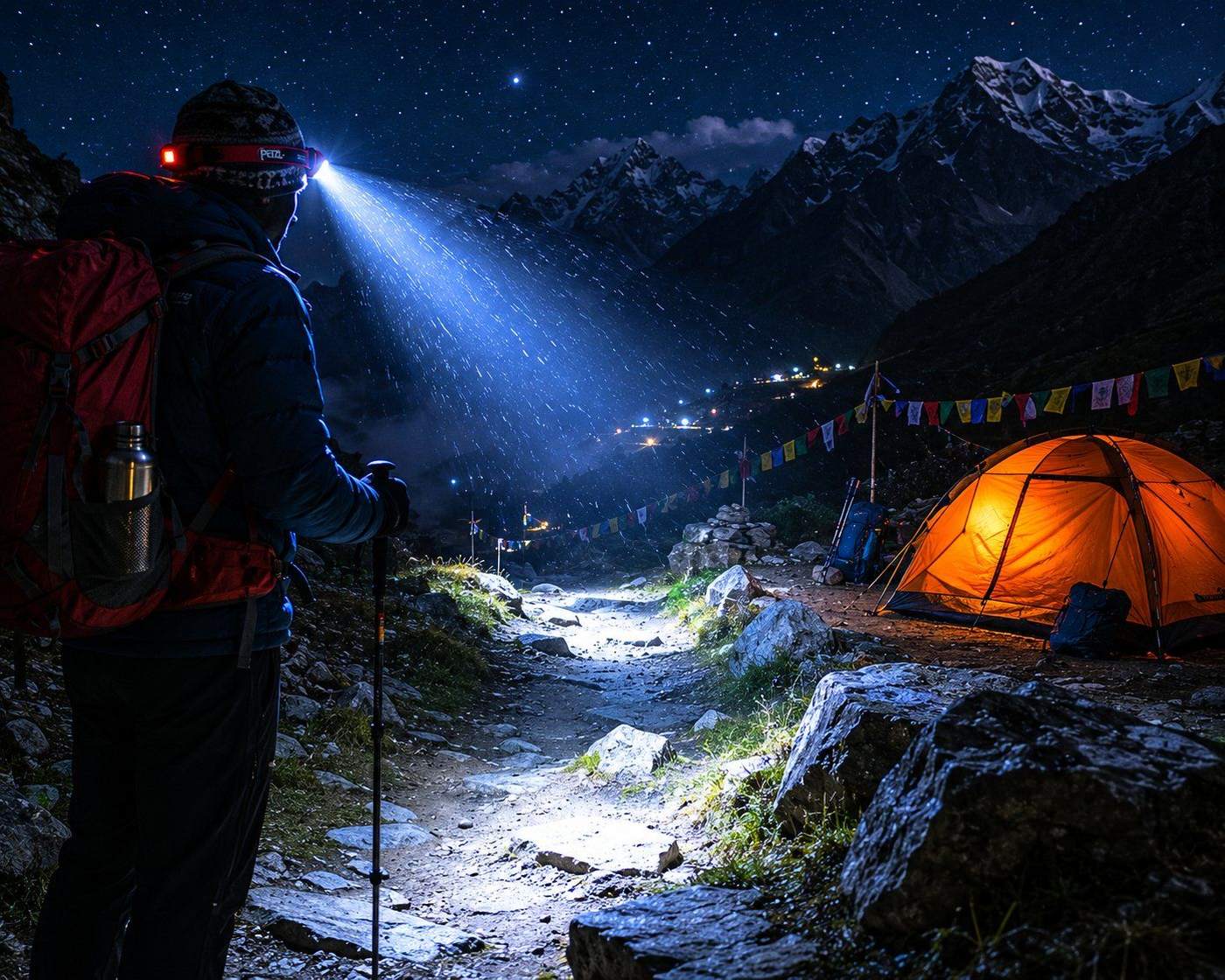
At 3:45 AM in Gaurikund, the parking lot is full of headlamps. Porters, pilgrims, and trekkers assembling their packs in the dark before the 16 km climb to Kedarnath temple. I was there last September, and I was the one standing at the edge of the lot with my phone flashlight on, watching everyone else move efficiently up the trail while I tried to balance my pack straps and keep the phone pointed somewhere useful with a third hand I do not have. By the time I reached Jungle Chatti - roughly 3 km in - my phone was at 25% charge, down from 60% at the start. The flashlight had run for less than two hours and it had taken a sixth of my battery. I borrowed a friend's Decathlon headlamp and my phone sat at 25% for the rest of the day. That experience is why I wrote this article. The phone flashlight argument sounds reasonable until you are on a pre-dawn start with 11 km still to go, your hands full, and your navigation, camera, and emergency communication device slowly going dark.
Detailed reviews
1. Decathlon Forclaz HL100
Best value✓ Pros
+ Rs 499 is the best value headlamp in India
+ 50 lumens on high - adequate for trail navigation
+ 30+ hours on low mode with AAA batteries
+ IPX4 water resistance - handles rain on the trail
✕ Cons
– 50 lumens is not enough for scrambling or technical terrain
– AAA batteries need spares - not rechargeable
– No red mode
– Beam is flood only - no focused spot
2. Decathlon Trek 500
Best overall✓ Pros
+ 200 lumens on high - serious trail visibility
+ USB rechargeable - no spare batteries needed
+ Red mode preserves night vision in shared tents
+ IPX4 water resistance
✕ Cons
– Rs 799 is 60% more than the HL100
– Battery life: 4 hours on high, 20 hours on low
– USB-C cable not included - uses micro-USB
– Slightly heavier at 75g
3. Nitecore NU25
✓ Pros
+ 360 lumens burst mode - brightest on this list
+ USB-C rechargeable
+ Red mode + high CRI mode for camp use
+ Ultralight at 28g - lightest headlamp available
✕ Cons
– Rs 999 is at the top of the budget
– Burst mode drains battery in under 2 hours
– Amazon availability can be inconsistent
– Overkill for most pilgrimage routes
4. Foxelli MX500
✓ Pros
+ Bright at 165 lumens
+ Both spot and flood beam modes
+ Red mode included
+ Comfortable elastic headband
✕ Cons
– AAA batteries, not rechargeable
– Heavier at 90g with batteries
– Amazon-only brand - no local service
– IPX5 rating is good but unverified independently
5. Generic Amazon Headlamps Under Rs 300
Not recommended✓ Pros
+ Extremely cheap
+ Works for emergency one-time use
+ Available next-day on Amazon
✕ Cons
– Lumen claims are consistently overstated by 3-5x
– Battery life is unpredictable
– Water resistance is often nonexistent despite claims
– Headband breaks under sustained use
Buying guide
Four reasons a headlamp beats your phone
Hands-free operation: your hands carry trekking poles, adjust pack straps, hold railings on steep sections, and manage food and water. A phone flashlight requires one hand permanently committed. A headlamp points wherever your head points. Weight: 50-80g vs 200g for a phone. Battery: a headlamp runs 30-50 hours on low mode vs 2-3 hours of phone flashlight draining your only navigation and emergency device. Red mode: preserves night vision in shared tents without blinding your tent-mates.
Bottom line
First headlamp, budget minimum: Forclaz HL100 at Rs 499. It works. Best under Rs 1,000: Trek 500 at Rs 799 for USB recharging, 200 lumens, and red mode. Ultralight trekkers: Nitecore NU25 at Rs 999 for 28g weight and USB-C. Never rely on your phone flashlight for pre-dawn starts on mountain trails. The Rs 499 headlamp is cheaper than the power bank charge you will waste on a phone flashlight, and it frees both hands for the trail.
Trips this gear is for
Destinations