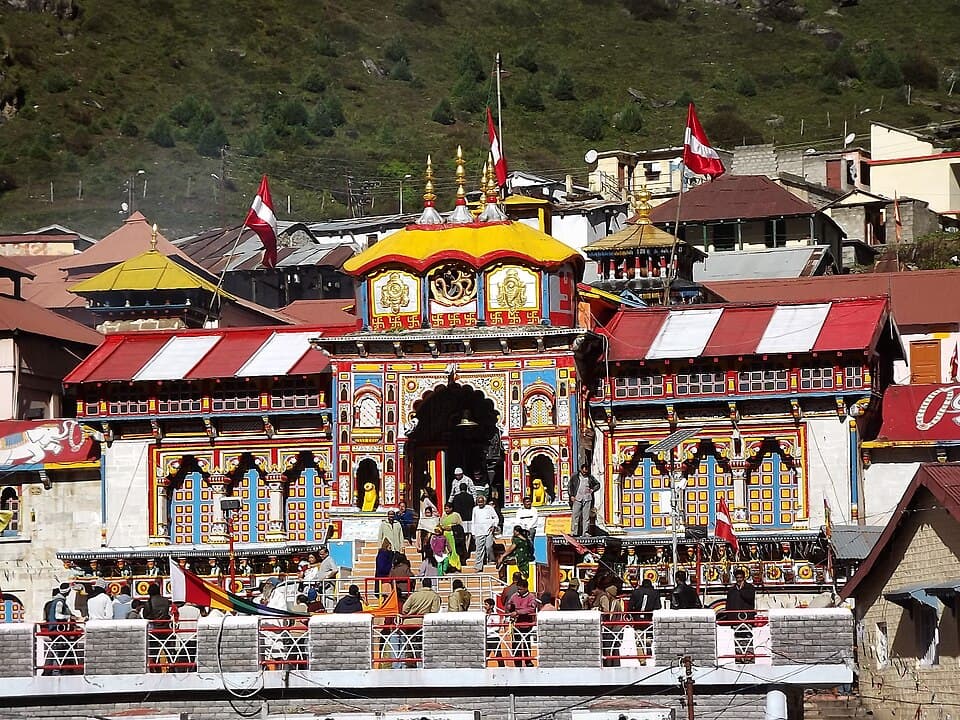
Badrinath is the easiest of the four Char Dham temples to reach. There is no trek. You drive to 3,133m, park the car, walk 200 metres, and you are at the temple. That accessibility makes it the most visited of the four - and also means the logistics are different from Kedarnath in every way.
The route from Rishikesh covers 295 km on NH-7 and then the Badrinath National Highway through Joshimath. The road is paved the entire way. I have done Badrinath twice - once as a quick overnight from Rishikesh and once with the full Mana village day-trip. The two-night version is the right call.
The route: Rishikesh to Badrinath
295 km on NH-7 via Devprayag, Rudraprayag, Karnaprayag, Nandprayag, Chamoli, Pipalkoti, and Joshimath. Road is paved throughout. Drive time: 9-10 hours with stops.
Joshimath (1,890m) is the last major town before Badrinath, 45 km out. Fuel, ATMs (SBI), restaurants, and accommodation all available here. If arriving late, sleep in Joshimath rather than pushing to Badrinath in the dark - the last 45 km is narrow mountain road.
Transport options: GMOU/UPSRTC bus from Rishikesh ISBT (Rs 500-700), shared Sumo from Rishikesh (Rs 800-1,200), private taxi (Rs 5,000-8,000). Bus takes 10-12 hours.
The Badrinath road shares the corridor with Kedarnath until Rudraprayag, then continues north toward Joshimath while the Kedarnath road turns east. Plan accordingly if doing both on the same trip.
Temple darshan: timings and what to expect
Badrinath temple opens for darshan twice daily:
Morning: 4:30 AM (Maha Abhishek) to 1:00 PM
Evening: 4:00 PM to 9:00 PM
The Maha Abhishek at 4:30 AM is the main ritual. Arrive by 4:00 AM for a good position. The temple closes for afternoon rest between 1:00 PM and 4:00 PM.
Queue time in May peak: 2-4 hours. Queue time in September-October: 30 minutes to 1 hour. The difference is dramatic.
Dress code: no specific strict code but conservative clothing is expected. Remove shoes before entering. Photography is not allowed inside the sanctum.
The temple itself is compact. The black stone Vishnu idol (Badrinarayan) is the central deity. The entire darshan - queue to exit - takes 15-30 minutes once you reach the sanctum.
Tapt Kund: the hot spring
Tapt Kund is a natural hot sulphur spring at the base of the temple. Water temperature: 45-55C. Tradition says pilgrims bathe here before darshan. Separate bathing areas for men and women.
The water is genuinely hot. In October, stepping from 2C morning air into 50C water and then back out is a shock. Brief immersion (2-5 minutes) is the norm. There is also a cold pool (Narad Kund) nearby for contrast.
Practical note: bring a change of dry clothes and a towel. The changing facilities are basic.
Mana village: the better reason for a second night
Mana village is 3 km from Badrinath temple and is officially the last Indian village before the Tibetan border. It is the reason to stay two nights instead of one.
Walk from Badrinath to Mana (3 km, 30-40 minutes). The village is home to the Bhotiya community. Key sites: Vyas Gufa (cave where Vyasa is said to have composed the Mahabharata), Bhim Pul (natural rock bridge over the Saraswati river), and the Saraswati river origin point where it emerges from underground.
The last Indian dhaba (literally - there is a sign) serves chai, Maggi, and parathas with a view of the border mountains. Worth the walk for that alone.
Mana is best in the morning. Leave Badrinath by 7 AM, reach Mana by 7:30, explore for 2-3 hours, return for afternoon darshan or departure.
Accommodation
GMVN Devlok (Badrinath): Government guesthouse right near the temple. Rs 800-2,500 per room. Clean, functional, well-located. Book at gmvnl.in.
Private hotels: Rs 1,000-3,000 per room in season. Quality varies significantly. Hotels near the bus stand are cheaper but noisier.
Joshimath (45 km away): Better value accommodation with more options. Rs 600-1,500 per room. Useful if arriving late or if Badrinath hotels are full.
Peak season (May-June weekends): Book GMVN 2 weeks ahead. September-October: walk-in availability most days.
Helicopter option from Dehradun
Helicopter service operates from Dehradun (Sahastradhara helipad) to Badrinath directly. One-way ticket: Rs 6,000-8,000. Flight time: approximately 45 minutes.
Book through IRCTC HeliYatra portal or authorized operators. Availability is better than Kedarnath helicopter slots because demand is lower.
The helicopter eliminates the 295 km road journey entirely. For pilgrims with limited time or mobility issues, this is a genuine option. Return helicopter + 1 night stay makes Badrinath possible as a 2-day trip from Dehradun.
Budget breakdown
Budget (Rs 3,000-5,000): Bus from Rishikesh Rs 500-700, GMVN dormitory Rs 400-600/night x2, dhaba meals Rs 150-250/day, total Rs 3,000-5,000.
Mid-range (Rs 8,000-12,000): Shared Sumo Rs 800-1,200, private hotel Rs 1,500-2,500/night x2, restaurant meals Rs 300-500/day.
Comfort (Rs 15,000-20,000): Private taxi Rs 5,000-8,000, good hotel Rs 2,500-3,500/night x2, meals at hotel.
Helicopter (Rs 20,000-30,000): Helicopter both ways Rs 12,000-16,000, hotel Rs 2,500/night, meals Rs 500/day.
Cash note: Joshimath ATMs work. Badrinath has 1-2 ATMs that are semi-reliable. Carry Rs 5,000+ cash from Joshimath.
Best time to visit
May-June: Peak season. Temple freshly opened. Crowds high, especially weekends. Weather: 8-18C days, 2-5C nights. Helicopter and accommodation book up.
July-August: Monsoon. Temple open but road risk from landslides. Avoid unless experienced.
September-October: The recommended window. Crowds drop dramatically. Clear views of Neelkanth peak behind the temple. Weather: 5-15C days, 0-5C nights. Book GMVN 1 week ahead.
November: Closing ceremony around Bhai Dooj. Temple closes for winter. Very cold.
See /guides/best-time-char-dham for the full month-by-month analysis.
Combining with Valley of Flowers
Valley of Flowers National Park is accessible from Govindghat, which is 25 km before Badrinath on the same road. The park opens July to September (peak bloom: August).
Combination itinerary: Joshimath base, Day 1 drive to Govindghat and trek to Ghangaria (14 km). Day 2 Valley of Flowers (round trip from Ghangaria). Day 3 optional Hemkund Sahib. Day 4 return to Joshimath, drive to Badrinath. Day 5 Badrinath darshan + Mana village.
This combination works best in August-September when both Valley of Flowers is in bloom and Badrinath is open with lower crowds.
When to go
What to pack
A full packing checklist is available to tick off and share. Start with these essentials, then adjust for the current forecast, route and your own needs:
Questions I get asked
Official planning resources
Use these official pages for the latest permits, registration, access rules and operational notices.