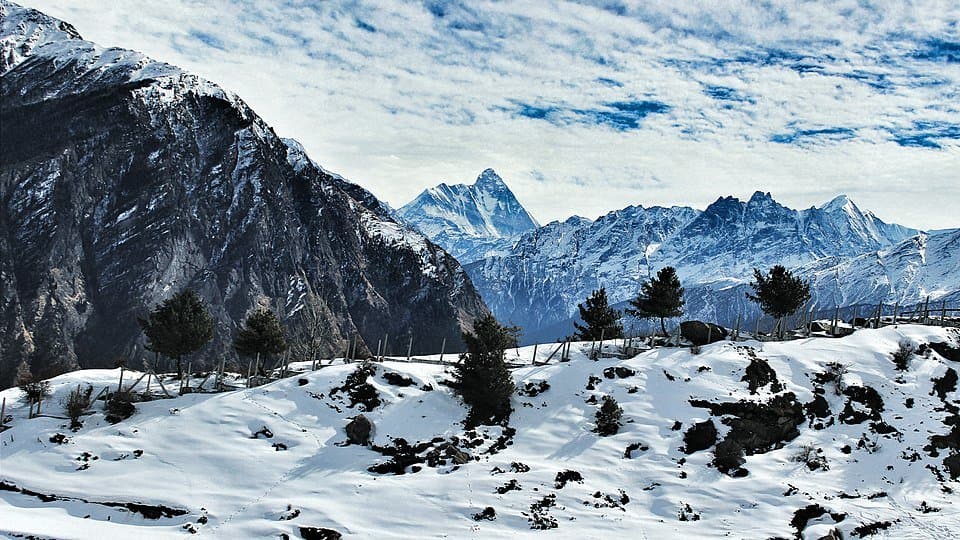
I drove to Joshimath in February on roads I had not driven in winter before. The stretch from Chamoli to Joshimath - about 40 km - had patches of black ice where the road cuts under north-facing cliffs that don't see direct sun. I went at 30 km/h the whole way. The car behind me overtook and slid slightly on a bend before recovering. I kept the 30 km/h.
The gondola at Auli opened at 8 AM. I was the third person in the cable car. By the time I had done three runs on fresh snow, it was 11 AM and the weekend crowd had arrived. The queue for the gondola was 20 minutes. That window from 8 AM to 11 AM on a fresh-snow morning is what Auli skiing is about. Miss it and you have got a different experience.
That context matters because Auli's rewards are precise. Go in the right months, be there at the right time of day, and it delivers something genuinely good for India. Go in summer, arrive at noon, expect European resort standards - and you will leave unimpressed.
This page covers all of it honestly.
Auli vs every other Indian ski destination
People occasionally ask whether to go to Gulmarg or Auli. The honest answer: Gulmarg in Kashmir has more vertical drop (about 1,400m vs 500m at Auli), heavier snowfall, and a gondola that goes to 3,979m at Kongdoori. But Gulmarg has a separate set of logistics and advisories for the Srinagar route that change year to year.
Kufri near Shimla gets marketed as a ski destination. It is not a ski destination in any serious sense. The slopes are short, the snow is thin in most years, and it operates more as a tourist photo spot than a ski area.
Solang Valley near Manali is closer to Auli in terms of altitude and seriousness but has less developed infrastructure for multi-day skiing.
Auli sits at the top of the Indian ski destination list for accessibility from the Uttarakhand-Delhi-Dehradun corridor, resort infrastructure (GMVN has operated the slopes since the 1980s, ski instructors, equipment rental), and the combination of skiing plus the Nanda Devi viewscape that no other Indian ski resort can match.
Dehradun to Auli - the full route
Route: Dehradun - Rishikesh - Devprayag - Srinagar (Pauri Garhwal) - Rudraprayag - Chamoli - Joshimath - Auli. 295 km total. In good summer conditions, 8 hours. In February with winter road conditions past Chamoli, budget 9-10 hours. The road is National Highway 7 (the Char Dham highway) for most of the distance.
Key distances: Dehradun to Rishikesh 43 km (1 hour). Rishikesh to Devprayag 70 km (2 hrs). Devprayag to Rudraprayag 69 km (2 hrs). Rudraprayag to Chamoli 55 km (1.5 hrs). Chamoli to Joshimath 12 km (30-45 min, steep, narrow in sections). Joshimath to Auli cable car base 1 km walk/auto. Joshimath to Auli via gondola 25-30 minutes. Joshimath to Auli by road 14 km winding road, 45 minutes by taxi.
Shared transport: shared taxis run from Rishikesh ISBT to Joshimath for Rs 500-700 per seat. These run throughout the day in season, with early morning departures more reliable. From Joshimath, autos and local taxis go to the cable car base.
There is no direct bus from Dehradun to Joshimath that I would recommend for a February skiing trip. Take the Rishikesh-to-Joshimath shared taxi or drive.
If driving from Dehradun in winter: leave by 5-5:30 AM to reach Joshimath by 2-3 PM, rest, and ski the next morning. Do not try to drive from Dehradun and ski on the same day.
The cable car - what you need to know
The gondola (technically a ropeway) runs from Joshimath at 1,875m to the Auli resort area at approximately 3,049m over 4.15 km. GMVN (Garhwal Mandal Vikas Nigam) operates it. By some measurements it is the longest cable car in Asia, though this classification gets disputed depending on how cable car is defined in different countries.
Fare: Rs 1,000 return per person (as of 2025-26 season, check GMVN for updates).
Timings: Generally 8:00 AM to 5:00 PM, but operational hours shift by season. In peak skiing season (January-February), the cable car starts at 8 AM. In summer, timings may be 9 AM to 5 PM. Closed for maintenance some days - the GMVN Auli office in Joshimath has current information.
What the ride gives you: 25-30 minutes in the gondola with the Nanda Devi massif visible on clear days from the ascending car itself. The view at the top station on a clear morning - before the afternoon haze and cloud build - is one of the better mountain panoramas accessible by cable car anywhere in India.
There is also a chairlift within the Auli ski area (800m) that operates specifically on the ski slopes during winter season.
The alternative to the gondola is a 14 km road from Joshimath to Auli. Taxis charge Rs 800-1,200 for the one-way journey. In skiing season, most visitors take the gondola both ways because the road is slower and the gondola itself is part of the Auli experience.
Skiing at Auli - the honest picture
Auli is India's best ski destination. It is also not a European ski resort. Getting this calibration right before you go matters.
What the GMVN ski resort provides: about 3 km of maintained slope with different difficulty sections. Ski equipment rental Rs 500-800/day for the complete set (skis, boots, poles, helmet). Ski instructors for beginners Rs 600-800/hour (1-on-1), group lessons cheaper. Artificial snow machines for years when natural snowfall is inadequate. Chairlift within the resort for repeat runs without the full gondola. GMVN Clifftop Club Resort directly on the slopes for those who want on-mountain accommodation (Rs 6,000-12,000/night).
What the resort does not have: multiple distinct ski runs of varying difficulty at the level of international ski resorts. High-speed detachable quads or gondola capacity for large weekend crowds without queuing. On-slope restaurants, rental shops at multiple points, apres-ski infrastructure.
Natural snow vs artificial snow: when January and February bring heavy snowfall, Auli is genuinely excellent. The powder on the runs is comparable to mid-range European resort conditions. When natural snow is thin, GMVN runs the artificial snow machines. Artificial snow is skiable but icier and less forgiving for beginners. Check snow reports before confirming dates.
Best hours on the slope: 8 AM to 11 AM on weekdays. Weekend crowds (families from Delhi, Dehradun day-trippers, school groups) arrive by late morning. By noon on weekends, the gondola has 20-minute queues and the slopes are more crowded. Experienced skiers plan for the first 2-3 hours.
Beginner lessons: GMVN instructors are competent. The beginner area near the gondola top station is gentle enough to learn on. Budget 2 full days of lessons (4-6 hours each) before attempting the full 3 km slope. Total lesson cost for 2 days: Rs 4,800-9,600 depending on group vs individual.
Month-by-month - when Auli is worth going
January: -4 to 4C, excellent skiing (peak season), no meadow trekking, high weekend crowds, ice possible past Chamoli.
February: -2 to 6C, excellent skiing (powder likely), no meadow trekking, high weekend crowds, ice risk manageable.
Early March: 2 to 10C, skiing possible (snow thinning), no meadow trekking, moderate crowds, roads generally clear.
Late March: 8 to 14C, skiing poor to none, meadow trekking opens, low crowds.
April: 10 to 18C, no skiing, good meadow trekking (lower bugyals), low crowds.
May: 12 to 20C, no skiing, good meadow trekking (rhododendrons), moderate crowds.
June-September: monsoon affecting trails, no skiing, road work and landslide risk.
October: 5 to 14C, no skiing, excellent meadow (golden bugyal), moderate crowds, clear views. The best month for the non-ski Auli experience.
November: -2 to 8C, no skiing, partial meadow (lower sections), low crowds, snow possible Chamoli onwards.
December: -6 to 2C, early skiing (if snow), no meadow, low crowds, high winter road risk.
The honest summary: Auli has two worthwhile windows. January-February for skiing, and October-November for the meadow and views combination. Summer Auli (June-September) is a cable car ride to a pleasant meadow with Himalayan views - not bad, but not what Auli is known for.
Nanda Devi views from Auli
The top gondola station at 3,049m is one of the best accessible viewpoints for the Nanda Devi massif in Uttarakhand. Nanda Devi at 7,816m is visible directly to the northeast, with Mana Peak (7,272m), Kamet (7,756m), and Dronagiri (7,066m) filling the rest of the panorama. On clear days you can also see portions of the Badrinath massif to the north.
For comparison: Nanda Devi is India's highest mountain and one of the most imposing peaks in the central Himalayas. The view from Auli at 3,049m - with a vertical relief of nearly 5,000m between your feet and the summit - is uncommon.
Best conditions for the view: clear mornings before 11 AM are the rule in October and November. In January-February, morning clarity is good but clouds sometimes build by early afternoon. By monsoon months (July-August), cloud cover blocks the peaks on most mornings.
The view from within the ski runs and from the gondola top station is essentially the same - you do not need to be on skis to access it. The cable car ride itself, climbing through 1,174m of altitude over 4.15 km, gives you the panorama at a pace slow enough to take it in.
Gorson Bugyal - the non-skiing reason to go
Gorson Bugyal is a high-altitude meadow at 3,056m, about 3 km from the Auli gondola top station on a trail through oak and rhododendron forest. An easy 2-3 hour round trip from Auli that does not require any skiing ability.
When to go: April-May for rhododendrons in full bloom on the trail. October for the golden meadow grass against the Himalayan backdrop. The same October window that gives the best Nanda Devi views also gives the best Gorson Bugyal conditions.
The trail from Auli to Gorson is well-defined but not paved - moderate fitness is enough. The meadow itself is flat and open, with 270-degree views of the Nanda Devi range. In April-May, the rhododendron trees on the lower trail section are at peak bloom.
Gorson to Kwani Bugyal: for those with more time, Kwani Bugyal is a further 5 km from Gorson at 3,380m. The round trip from Auli becomes a 16 km day - more serious, less-visited, and worth it for experienced trekkers who want the extended meadow experience without committing to the full Kuari Pass.
The Kuari Pass connection: Auli is the standard starting point for the Kuari Pass trek, one of the better 4-5 day Himalayan treks accessible without technical climbing skills. The route: Auli (3,049m) - Gorson Bugyal (3,056m) - Tali (3,060m) - Khulara (3,640m) - Kuari Pass (3,272m) - Tapovan. 45-50 km total over 4-5 days, gaining and losing altitude through high-altitude meadows, oak forests, and the Kuari Pass ridge with Nanda Devi views for much of the route. If planning Kuari Pass, read the acclimatize-above-3000m and packing-4000m guides before the trip.
Joshimath - the base town
Joshimath at 1,875m is the base for Auli and the larger gateway town for Badrinath, Hemkund Sahib, and the Nanda Devi biosphere reserve.
Accommodation: multiple hotels in the Rs 800-1,500/night range for doubles. GMVN has a tourist rest house in Joshimath (Rs 1,000-2,000/night). Book ahead for January-February ski season weekends.
ATM and cash: Joshimath has a reliable ATM - it is one of the last ATMs before Badrinath and Mana. For the Auli trip, carry enough cash from Joshimath. The GMVN resort at Auli accepts cash, card acceptance is inconsistent in winter. See the atm-cash-guide for the wider logistics.
Food: Joshimath has multiple dhabas and restaurants along the main street. Rice, dal, sabzi, and egg preparations are consistently available. The GMVN Clifftop Club Resort at Auli has its own dining but meals there are priced at resort rates.
The land subsidence issue: in January 2023, Joshimath experienced significant land subsidence - cracks appeared in over 600 buildings across multiple wards, and the government evacuated around 250 families from the most affected zones. As of 2026, the situation has stabilized in most parts of town. Some structures in the affected wards (particularly the lower Manohar Bagh and Singhdhar wards) still show cracking. When booking accommodation, confirm the specific hotel location and check current Uttarakhand government advisories. The cable car base and the main bazaar area have not been in the highest-risk zones.
What to pack for Auli
For January-February skiing: heavy insulated jacket (ski jackets or equivalent, minimum -10C rated). Thermal base layer - not optional at 3,049m in January. Waterproof outer layer (ski pants or waterproof trousers, snow contact is constant). Gloves rated for -10C - thin liner gloves alone are inadequate. Ski goggles - GMVN rents these but bringing your own is more comfortable. Warm socks (wool preferred, 2-3 pairs). Neck gaiter or balaclava for the gondola and between runs. Sunscreen - UV at 3,000m in February snow is intense.
The GMVN resort provides skis, boots, poles, and helmet in the rental package. You do not need to bring your own ski equipment unless you ski regularly and prefer it.
For October meadow trekking: mid-weight jacket (fleece + windproof shell is enough for October days). Warm layer for evenings and early mornings at Joshimath (down or insulated jacket). Trekking shoes (mid-cut) for the Gorson Bugyal trail. Headlamp if doing an early morning gondola ride for sunrise views. Power bank - charging in Joshimath guesthouses is available but unreliable in some properties. Backpack for day hikes - 20-25L is enough for a day hike from Auli to Gorson.
See jackets-kedarnath-trek, thermals-high-altitude, trekking-shoes-under-5000, headlamps-under-1000, power-banks-trek, and backpacks-chopta-tungnath gear pages for specific picks.
Budget breakdown
3-day self-arranged skiing trip per person from Dehradun: Dehradun to Rishikesh to Joshimath (shared taxi) Rs 700-900. Joshimath hotel 2 nights Rs 1,600-3,000. Cable car 2 days return Rs 2,000. Equipment rental 2 days Rs 1,400-1,600. Ski instructor 4 hours beginner Rs 2,400-3,200. Food 3 days (Joshimath dhabas) Rs 900-1,500. Miscellaneous (autos, snacks) Rs 300-500. Total Rs 9,300-12,700.
GMVN 3-day ski package: Rs 8,000-12,000 all-inclusive.
October trek trip per person, 3 days from Dehradun: transport (shared taxi both ways) Rs 1,400-1,800. Joshimath hotel 2 nights Rs 1,600-3,000. Cable car 2 days Rs 2,000. Food 3 days Rs 900-1,500. Total Rs 5,900-8,300.
GMVN package comparison: when you add cable car (Rs 1,000/day), equipment rental (Rs 700/day), and Joshimath accommodation (Rs 1,000-1,500/night) for 3 days, the total is in the same range as the all-inclusive GMVN package. For beginners who want structured instruction included, the package is the more efficient choice.
Road conditions and travel advisory
Winter road (November-February): the Rishikesh to Rudraprayag section is generally clear year-round. Past Chamoli, especially on the climb to Joshimath, black ice forms on north-facing bends that receive no sun. This is not theoretical - I experienced it on my February trip. If driving in winter: carry snow chains, start early (ice is worse in early morning but driving in darkness is worse than ice), and drive slow through the shadow sections. A 4WD vehicle is preferred but not strictly necessary if you have snow chains and drive carefully.
Monsoon road (July-September): the Char Dham highway sees significant landslide risk between Devprayag and Rudraprayag, and on the Chamoli-Joshimath stretch. See the monsoon-routes guide for the specific decisions for travelling this route in July-September.
BRO maintenance seasons: April-May sees active road widening and repair work on the Char Dham highway. Delays of 1-2 hours at construction points are common. Leave Dehradun or Rishikesh by 5 AM to clear the construction sections before peak working hours.
Beyond skiing - what to combine: Chopta is 160 km south of Joshimath via Rudraprayag (separate trip). Badrinath is 45 km north of Joshimath on the same road and open May-October - combining Auli (October visit for views) with a Badrinath darshan on the same trip works well.
When to go
What to pack
A full packing checklist is available to tick off and share. Start with these essentials, then adjust for the current forecast, route and your own needs: